Hello :-)
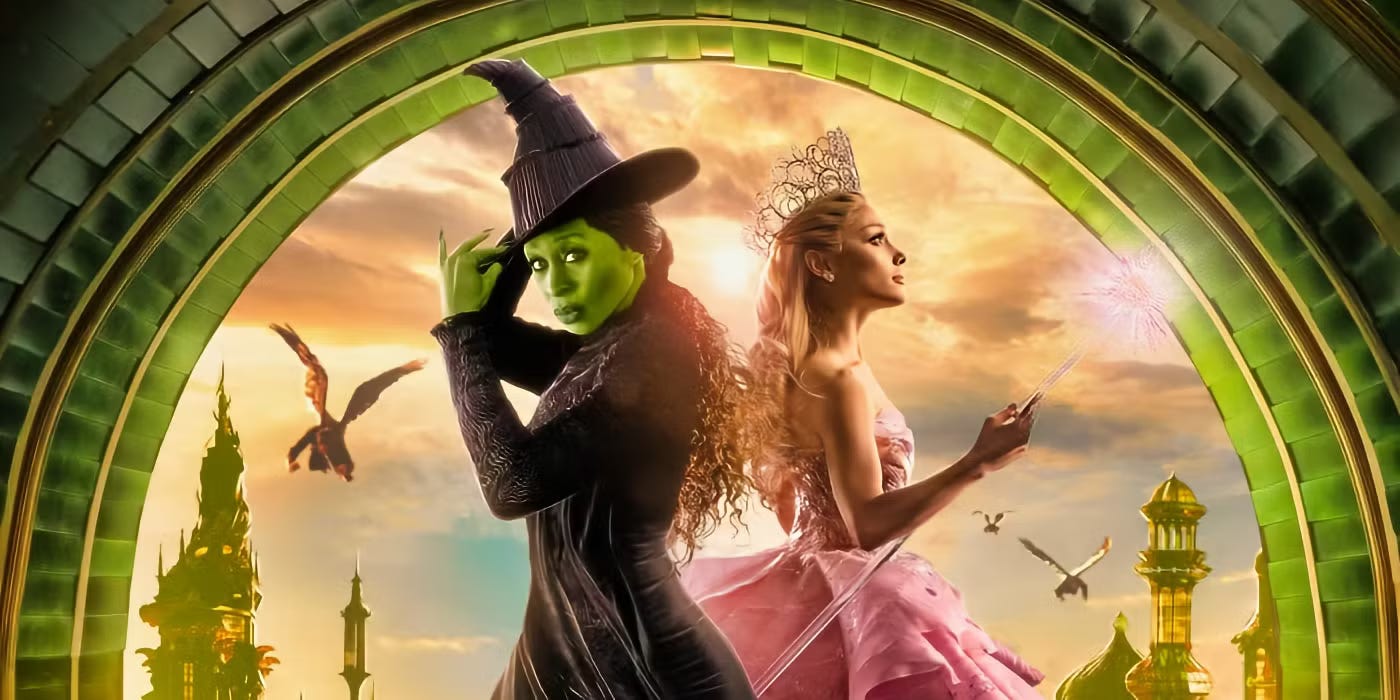
I went to see Wicked: For Good last week, and it was absolutely amazing!
I've loved the stage show of Wicked for years, and the films have brought the story to life in a really enjoyable way. I was excited to see the second installment - not just for the spectacular staging or powerhouse vocals - but because at its heart, the Wicked story is about friendship, in all its complexity (and as we know, I'm all about friendship!)
The friendship at the heart of Wicked is between two intelligent, capable women - Elphaba, who really struggles to make friends and to find acceptance and belonging, and Glinda, whose journey is about learning the value of friendship which goes beyond the surface. It's telling that the most powerful, emotive, romantic ballad in the whole story ('For Good' - you
can find it on Spotify!) is sung by these two characters, reflecting on their relationship.
One of the things I've always loved most about Wicked is that it doesn't shy away from the messy reality of how deep friendships come to be, or what it takes to make them work. Elphaba and Glinda care deeply for each other, yet share huge differences in priorities, likes / dislikes, values, temperaments and social standing. They have different opinions, they often disagree, they choose opposing paths. They hurt each other, sometimes
unintentionally, other times on purpose. And yet their friendship grows stronger and stronger.
But how?
We're taught that true friends should always be there for each other, always support each other, always prioritise each other, and are always kind to one another. We're taught that friendship should feel good, that we should forgive and forget, that we should smooth over awkwardness, smile, be nice, accept. It's not that any of this is necessarily wrong, for the majority of the time. But when I think back to my own friendships,
and the points where we became closer, really 'got' where the other person was coming from, and grew in love, understanding and in how grateful we were for each other, it wasn't during the good times. It was in the misunderstandings we resolved, the things we got wrong and apologised for, the conversations about our differences where we listened with the intent to understand, rather than to be right. How we showed up for each other when each of us needed help. And the things we stood
alongside each other for, even when we disagreed.
It's the same for Elphaba and Glinda. Their friendship starts at the point where Glinda has played a prank on Elphaba, which results in her being humiliated in front of everyone else in their year at school. Their connection grows when three things happen - firstly, Glinda realises the enormity of what she's done, and how unkind it is. Secondly, she takes bold action to try to fix things - taking the risk of social rejection as she steps onto the
dance floor to join Elphaba, cashing in most of her social capital to transform Elphaba's image in the eyes of everyone there. But this in itself isn't enough for their connection to heal and deepen. For that to happen, Elphaba has to accept the effort that's been made, and to extend trust that Glinda will behave better in the future. By taking responsibility, Glinda shifts the power dynamic, making herself vulnerable to the person she used to hold power over. It's Elphaba's choice - when she chooses to accept Glinda's gesture, their connection deepens with new layers of understanding, forgiveness,
humility and acceptance.
It's a dance, literally and figuratively, and it teaches us importance of 'repair and rebuild' in developing the kind of authentic connections that thoughtful, independent adults crave but often struggle to find. My clients are often surprised to discover that meaningful friendship doesn't require constant agreement or identical life paths. What we actually need are a set of qualities - people who can handle our full humanity - our contradictions, our growth, our occasional difficult choices - and can share theirs too. And a set of skills - to be able to see where we've gone wrong, to make meaningful apologies, to debate difference healthily, to weigh up where we should give someone a chance, versus walking away.
Some of the richest friendships emerge precisely because we are different, and because that challenges us - forcing each other to admit our flaws and shortcomings, and changing each other 'for good' not by avoiding discomfort, but by facing it head on. The secret to these kinds of friendships is that we practice understanding, acceptance, and forgiveness, and lean on the respect we have for one another, in service of our friendship.
Let me know if you're a fan of the story of Wicked, and what you think of the film adaptations, if you've seen them. What's your main friendship 'takeaway?'
With warmth and love,
Hannah x
Hannah Carmichael OBE Friendship & Connection Coach www.hannahelliscarmichael.com
PS: If you're wondering about the "nuts and bolts" of how lasting friendships get made - or you're ready to be more intentional about building the connections that matter most - I can help. Book a Discovery Call for a chat about what's going on for you, and what a programme of work together could look like.
|